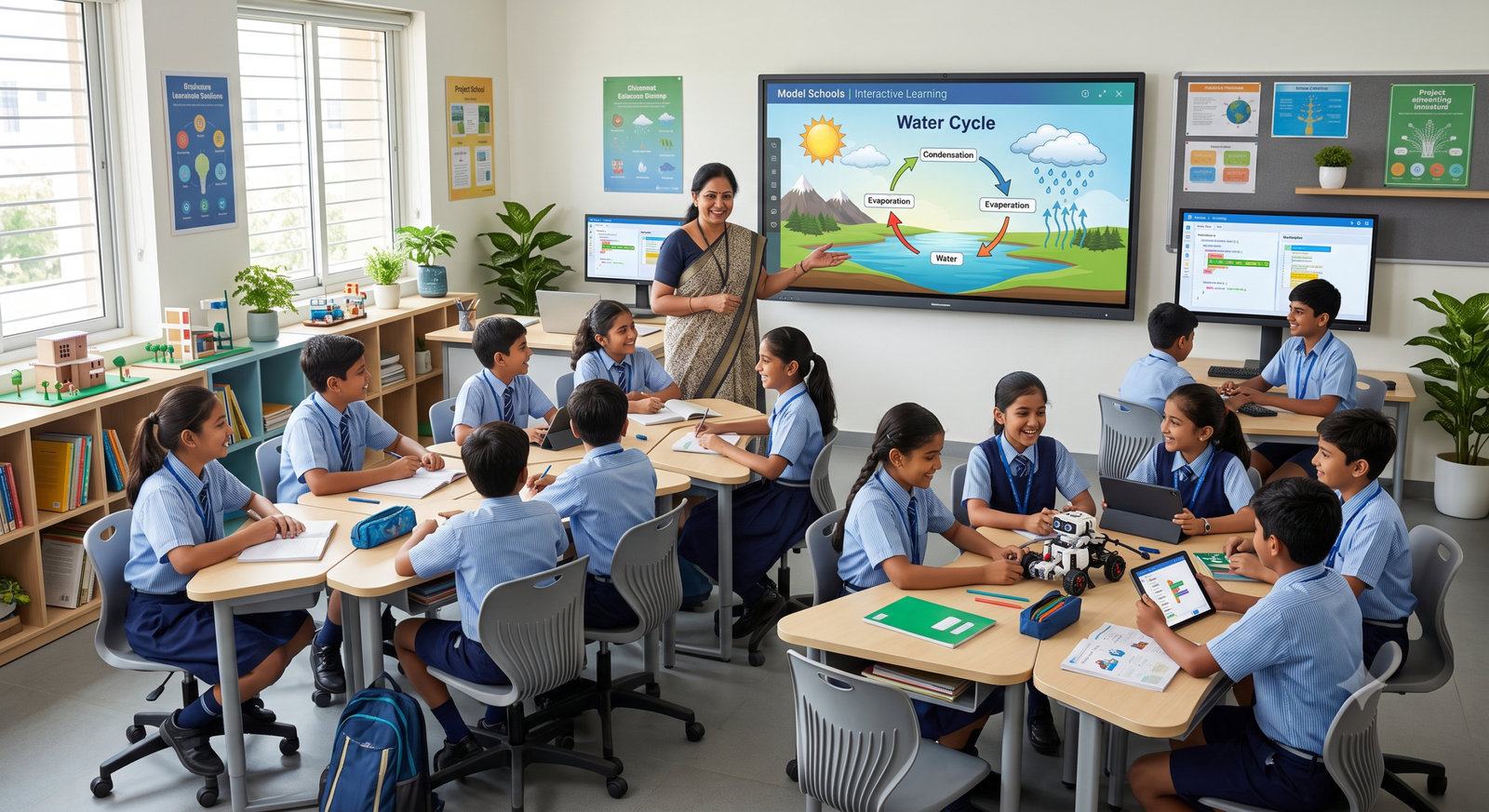

Education is undergoing a fundamental shift. Across the world, classrooms are moving away from traditional, rote-learning environments toward dynamic spaces where technology and pedagogy work in harmony. At the center of this transformation are Model Schools—institutions designed to set new benchmarks for educational quality, infrastructure, and student outcomes.
While modern hardware and digital tools often grab headlines, true educational transformation requires a balanced ecosystem. A state-of-the-art classroom is only as effective as the educator guiding the lesson. This article explores what defines Model Schools, the ideal setup for smart classrooms, the indispensability of skilled teachers, and how these elements combine to deliver a richer learning experience for every student.
What Makes a School a Model School?
A Model School is not simply a school with high tuition or expensive gadgetry. Instead, it serves as an archetype of high-quality education, exemplifying best practices in instruction, technology integration, curriculum delivery, and holistic student growth.
       ┌────────────────────────────────────────────────────────┐
       │                 THE MODEL SCHOOL TRIAD                 │
       └──────────────────────────┬─────────────────────────────┘
                                  │
         ┌────────────────────────┼────────────────────────┐
         ▼                        ▼                        ▼
┌──────────────────┐    ┌──────────────────┐    ┌──────────────────┐
│ Skilled & Caring │    │  Smart & Dynamic │    │ Student-Centric  │
│     Teachers     │    │   Infrastructure │    │    Pedagogy      │
└──────────────────┘    └──────────────────┘    └──────────────────┘
Core characteristics that set Model Schools apart include:
- Student-Centric Philosophy: Prioritizing conceptual understanding and individual progress over uniform memorization.
- Integrated Technology: Using digital tools thoughtfully to enhance, rather than replace, human-led instruction.
- Continuous Professional Development: Investing heavily in teacher skills, digital literacy, and modern pedagogical methods.
- Inclusive Learning Environments: Ensuring students of all learning abilities, backgrounds, and styles have equitable access to learning resources.
- Holistic Curriculum Alignment: Aligning with progressive educational standards, such as India’s National Education Policy (NEP 2020), which emphasizes multidisciplinary studies, critical thinking, and experiential learning over exam-centric drill work.
Initiatives like the Government of India’s PM SHRI scheme serve as practical examples of how government policy seeks to strengthen existing infrastructure and develop exemplar schools that demonstrate these modern learning environments in action.
The Heart of the Model School: Skilled and Continuously Trained Teachers
Devices, high-speed internet, and interactive panels can display information, but they cannot mentor, inspire, or comfort a struggling learner. The true core of any Model School remains its teaching staff.
                  ┌──────────────────────────────┐
                  │    Skilled Model Educator    │
                  └──────────────┬───────────────┘
                                 │
     ┌───────────────────────────┼───────────────────────────┐
     ▼                           ▼                           ▼
┌─────────┐                 ┌─────────┐                 ┌─────────┐
│ Dynamic │                 │  Data-  │                 │ Empathetic│
│ Pedagogy│                 │ Driven  │                 │ Mentorship│
└─────────┘                 └─────────┘                 └─────────┘
High-quality education relies on educators who possess both deep subject-matter expertise and strong pedagogical agility. In a modern classroom, a skilled teacher performs several distinct roles:
- Facilitator of Thinking: Instead of acting as the sole authority on information, the teacher guides students to ask questions, analyze source material, and solve complex problems.
- Adaptive Instructor: Skilled teachers notice when a concept fails to click. They alter their phrasing, switch up learning materials, or group students strategically to address learning gaps in real time.
- Digital Orchestrator: Rather than letting a screen run the lesson, capable educators selectively weave digital media into their instruction to clarify abstract topics.
Without continuous teacher training, even the most expensive smart classrooms risk becoming glorified lecture halls equipped with costly screens.
The Ideal Smart Classroom Setup
A well-designed smart classroom blends ergonomics, reliable hardware, and intuitive digital resources to create an engaging learning environment.
┌─────────────────────────────────────────────────────────────────┐
│                      IDEAL SMART CLASSROOM                      │
│                                                                 │
│  ┌──────────────────┐   ┌──────────────────┐   ┌──────────────┐ │
│  │ Interactive Panel│   │ High-Speed WiFi  │   │ Flexible     │ │
│  │ / Smart Board    │   │ & Cloud Storage  │   │ Seating      │ │
│  └──────────────────┘   └──────────────────┘   └──────────────┘ │
│  ┌──────────────────┐   ┌──────────────────┐   ┌──────────────┐ │
│  │ Audio System &   │   │ Learning Apps &  │   │ Power / Charging│
│  │ Microphones      │   │ LMS Integration  │   │ Stations     │ │
│  └──────────────────┘   └──────────────────┘   └──────────────┘ │
└─────────────────────────────────────────────────────────────────┘
Key hardware and infrastructure elements in a modern smart classroom include:
- Interactive Smart Boards & Touch Displays: High-resolution interactive panels allow teachers and students to annotate diagrams, manipulate 3D shapes, save notes digitally, and share work instantly.
- Projectors and Large Displays: Provide clear visibility for visual aids, video modules, and live demonstrations from anywhere in the room.
- Reliable Connectivity: High-speed internet ensures uninterrupted access to educational media and cloud-based resources.
- Audio Enhancement Systems: Clear microphones and distributed speakers ensure every student hears discussions comfortably without teacher voice strain.
- Flexible Furniture: Modular desks and chairs that rearrange quickly for group activities, labs, or individual work.
Essential Classroom Technology & Educational Software
Technology in a Model School serves a clear pedagogical purpose. Modern educational software categories streamline administration and enrich everyday classroom instruction:
| Technology Category | Primary Purpose | Practical Classroom Example |
| Interactive Smart Boards | Dynamic visual instruction and active participation | A middle-school science teacher drags, rotates, and zooms in on a interactive 3D model of a plant cell on screen. |
| Digital Learning Platforms | Supplying curated multimedia, simulations, and ebooks | A physics class uses interactive simulations to adjust friction variables and observe force dynamics in real time. |
| Learning Management Systems (LMS) | Centralizing coursework, assignments, and grades | Students submit essays online, while teachers leave recorded audio feedback directly on specific paragraphs. |
| Online Assessment Tools | Conducting formative checks and automated scoring | A math teacher conducts a 5-minute diagnostic warm-up to instantly check prior knowledge before starting a new unit. |
| Quiz & Interactive Learning Tools | Increasing engagement through gamified practice | A language teacher runs a vocabulary game where student teams compete to match terms with context clues. |
| Video-Based Learning Resources | Visualizing complex, microscopic, or historical events | A history class watches a 3-minute high-definition historical recreation to analyze primary source contexts. |
| Digital Classroom Management Tools | Tracking attendance, participation, and behavior | Teachers log daily attendance and send automated weekly summary reports to parents in a few clicks. |
Using Technology Without Over-Reliance
Technology should enhance teaching, not consume it. Model Schools advocate for balanced integration, keeping human connection, critical discussion, and hands-on work at the center of learning.
             ┌────────────────────────────────────────┐
             │       BALANCED CLASSROOM INTEGRATION   │
             └───────────────────┬────────────────────┘
                                 │
        ┌────────────────────────┴────────────────────────┐
        ▼                                                 ▼
┌─────────────────────────┐                     ┌───────────────────┐
│     HUMAN CORE          │                     │ DIGITAL ASSIST    │
│ • Critical Discussion   │     ENHANCED BY     │ • Visualizations  │
│ • Hands-On Experiments  │  ────────────────►  │ • Instant Practice│
│ • Mentor Feedback       │                     │ • Adaptive Pace   │
└─────────────────────────┘                     └───────────────────┘
Effective teachers use practical strategies to avoid screen fatigue and passive consumption:
- The 15-Minute Rule: Limit continuous screen viewing to short bursts, following up immediately with off-screen discussions, writing, or peer problem-solving.
- Hands-On First, Simulation Second: In science or mathematics, let students handle physical geometric blocks or conduct physical experiments before using digital simulations to analyze outcomes.
- Student-Created Digital Content: Instead of having students passively watch instructional videos, ask them to create short presentations, digital mind maps, or audio summaries explaining concepts in their own words.
Modern Teaching Methods in Action
Model Schools move away from passive lecture formats, adopting active, student-centric methodologies that build deep conceptual understanding:
1. Activity-Based Learning
Students discover concepts by doing.
Classroom Example: During a primary grade lesson on measurement, students use measuring tapes to calculate the perimeter and area of their own desks, classroom doors, and textbooks, recording data in digital notebooks.
2. Project-Based Learning (PBL)
Students work over an extended period to respond to an authentic, complex question or problem.
Classroom Example: A high school class investigates local water quality. Students collect neighborhood water samples, test pH levels in the science lab, analyze trend lines using digital spreadsheets, and present their findings to the school board.
3. Experiential Learning
Learning through direct reflection on hands-on experience.
Classroom Example: Rather than simply memorizing economic terms like supply and demand, business studies students run a mini-marketplace simulation in the school auditorium, adjusting prices based on customer interest and inventory levels.
4. Collaborative Learning
Students work together in small groups to solve problems, complete tasks, or create products.
Classroom Example: In an English literature class, students use shared digital documents to analyze a poem collaboratively. Each team member contributes annotations from a assigned critical perspective (e.g., historical context, literary devices, tone).
5. Personalized Learning
Instruction is tailored to the learning pace, preferences, and specific needs of individual students.
Classroom Example: While studying fractions, advanced students work through complex multi-step application problems, while another group uses digital visual manipulatives with guided teacher support to strengthen foundational concepts.
Teacher Development and Digital Skill Building
To keep pace with evolving educational technology, Model Schools prioritize continuous professional learning. Teacher development should be ongoing, collaborative, and embedded into the school calendar.
                  ┌──────────────────────────────┐
                  │ Teacher Skills Architecture  │
                  └──────────────┬───────────────┘
                                 │
     ┌───────────────────────────┼───────────────────────────┐
     ▼                           ▼                           ▼
┌─────────┐                 ┌─────────┐                 ┌─────────┐
│ Core    │                 │ Digital │                 │ Action  │
│ Pedagogy│                 │ Fluency │                 │ Research│
└─────────┘                 └─────────┘                 └─────────┘
Essential Digital Skills for Modern Teachers
To operate effectively in a modern environment, educators should focus on mastering specific skills:
- Data-Driven Analytics: Reading learning platform analytics to quickly identify students who need remedial support or advanced challenges.
- Digital Content Curation: Evaluating online resources, video modules, and applications for academic quality, safety, and relevance.
- Hybrid Classroom Management: Managing group dynamics seamlessly across both physical spaces and digital learning portals.
- Cyber Safety and Ethics: Teaching digital citizenship, online safety, and academic integrity when using digital sources.
Leveraging Technology for Assessment and Progress Tracking
Traditional assessment methods often deliver feedback weeks after an exam, making it difficult to address immediate learning gaps. Modern tools streamline assessment and make feedback actionable:
┌─────────────────────────────────────────────────────────────────┐
│                 THE MODERN ASSESSMENT FEEDBACK LOOP             │
│                                                                 │
│   ┌──────────────┐     ┌──────────────┐     ┌──────────────┐    │
│   │  Real-Time   │ ──► │ Instant Data │ ──► │ Differentiated│    │
│   │ Formative    │     │ Visualized   │     │ Immediate    │    │
│   │ Check        │     │ for Teacher  │     │ Support      │    │
│   └──────────────┘     └──────────────┘     └──────────────┘    │
└─────────────────────────────────────────────────────────────────┘
- Real-Time Diagnostics: Brief digital exit tickets give teachers immediate visualizations of class comprehension at the end of a lesson.
- Adaptive Testing: Questions adjust in difficulty based on student answers, helping pinpoint precise learning levels.
- Longitudinal Tracking: Learning platforms archive student performance data across multiple terms, helping teachers identify long-term learning trends and growth patterns.
Inclusive Classrooms and Differentiated Learning
Every classroom contains diverse learners with varying speeds, styles, and support requirements. Model Schools utilize smart design and adaptive technologies to ensure true educational access.
- Assistive Technologies: Screen readers, text-to-speech tools, adjustable text sizes, and closed-captioning support students with visual or hearing impairments.
- Differentiated Content: Digital platforms allow teachers to assign reading materials at varying reading levels while keeping core learning goals identical across the class.
- Multimodal Instruction: Presenting core concepts visually, auditorily, and kinesthetically ensures every student can access complex ideas.
Beyond Academics: Sports, Arts, and Life Skills
Academic achievement is only one measure of student success. A true Model School balances rigorous academics with strong programs in co-curricular areas:
┌─────────────────────────────────────────────────────────────────┐
│                   HOLISTIC STUDENT DEVELOPMENT                  │
│                                                                 │
│  ┌──────────────────┐   ┌──────────────────┐   ┌──────────────┐ │
│  │     Academics    │   │  Physical Education│  │  Arts & Tech │ │
│  │ Conceptual Math, │   │  Sports, Fitness,│   │ Music, Drama,│ │
│  │ Science & Humanities││  Teamwork        │   │ Coding & Design│
│  └──────────────────┘   └──────────────────┘   └──────────────┘ │
│                          ▲                                      │
│                          └────────────┬─────────────────────────┘
│                                       │
│                             ┌───────────────────┐               │
│                             │    Life Skills    │               │
│                             │ Communication,    │               │
│                             │ Ethics, Leadership│               │
│                             └───────────────────┘               │
└─────────────────────────────────────────────────────────────────┘
- Sports & Physical Fitness: Develops physical health, teamwork, resilience, and emotional balance.
- Arts & Creative Expression: Drama, visual arts, and music foster creative problem-solving, self-confidence, and cultural appreciation.
- Communication & Leadership: Debate clubs, student government, and public speaking opportunities build critical interpersonal skills.
How Students Benefit from a Model School Environment
When infrastructure, pedagogy, and skilled teaching align, students reap clear benefits:
- Deeper Conceptual Understanding: Hands-on activities and visual media make abstract topics tangible.
- Higher Engagement: Varied teaching methods keep learning active and interesting.
- Future-Ready Skill Sets: Students develop critical thinking, digital literacy, collaboration, and adaptability alongside academic knowledge.
- Increased Confidence: Differentiated support helps struggling students catch up while allowing advanced learners to excel.
Conclusion: Teachers + Technology = True Educational Growth
Technology alone cannot transform education. A screen in a classroom is simply a tool. Real educational progress happens when capable, caring teachers use appropriate digital tools to deliver student-centric learning experiences.
By investing in continuous professional development, building flexible smart classrooms, and maintaining a focus on human interaction, Model Schools provide a clear roadmap for modern education. Platforms like Educator Forum support this ecosystem by helping academic institutions and students discover skilled, adaptable teachers who can effectively bring these modern teaching methods to life in today’s classrooms.